

How Does Kaotica Compare to Foam Panels? |
How Does Kaotica Compare to Foam Panels?
Kaotica and foam panels are both used to improve recordings, but they do not solve the problem the same way.
Foam panels are designed to treat parts of a room.
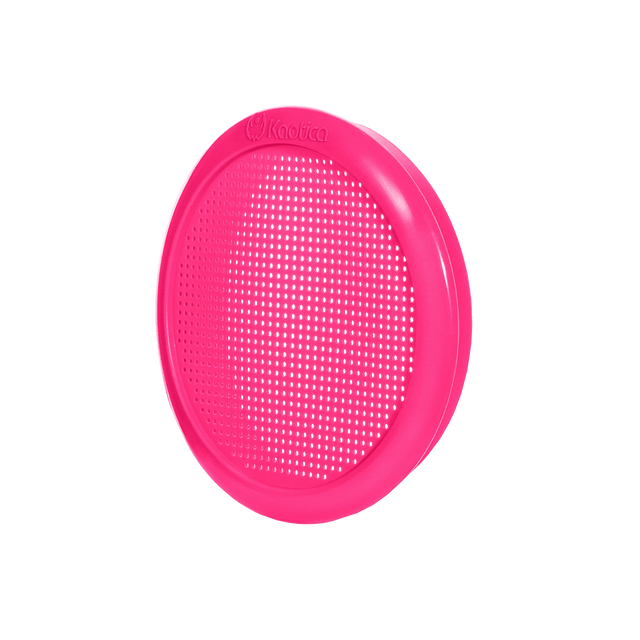
Kaotica is designed to treat the recording environment at the microphone.
That difference is the most important place to start.
Foam panels treat the room
Foam panels work by absorbing some of the sound energy that hits walls and other surfaces. When used correctly, they can help reduce reflections inside a space and make the room itself less reflective.
That can be useful in a dedicated studio, especially when you have the time, budget, and freedom to install treatment in the right places.
But foam panels usually require:
- enough wall area
- correct placement
- enough coverage to matter
- a setup that stays in one place
In other words, foam panels are part of room treatment.
Kaotica treats the mic
We take a different approach.
Instead of trying to improve the entire room, we focus on improving the space that matters most: the area directly around the microphone.
That is why our philosophy has always been:
Treat the mic. Not the room.
Kaotica is built to help the microphone capture more of the direct vocal and less of the surrounding room. That makes it a much more practical solution for creators recording in bedrooms, apartments, offices, hotel rooms, and other real-world spaces where full acoustic treatment is not realistic.
The science behind the difference
When you record vocals, the microphone hears two things:
- the direct sound of the voice
- reflected sound coming back from the room
The more reflected sound that reaches the mic, the more the recording can sound echoey, boxy, hollow, or unfocused.
Foam panels try to reduce reflections by changing how the room behaves after sound leaves the singer and hits the walls.
Kaotica works closer to the source. We are focused on controlling the acoustic environment around the microphone itself so the mic receives a cleaner, more focused vocal before the room has as much chance to interfere.
That is a very different strategy.
Instead of asking you to modify the entire room, we help improve what the microphone hears.
Why this matters in real-world spaces
For most creators, the issue is not whether room treatment works in theory.
The issue is whether it works in real life.
A lot of people do not have a dedicated studio. They record in shared rooms, small rooms, temporary rooms, or spaces they cannot permanently modify.
That is where foam panels become less practical.
They take up space. They are not portable. They require installation. And even then, a few panels on the wall do not automatically create a professional vocal environment.
Kaotica is built for the spaces people actually use.
That means:
- faster setup
- less space required
- no permanent installation
- better portability
- easier repeatability from room to room
Why portability changes everything
Foam panels stay on the wall.
Kaotica moves with your setup.
That matters more than people think.
If you record in different rooms, travel, work in temporary spaces, or simply do not want your recording solution attached to your walls, portability becomes a major advantage.
A portable solution also makes it easier to stay consistent. Instead of relying on every room to be treated properly, you bring control with you.
Foam panels can help, but they are not always efficient
This is where a lot of creators get stuck.
They start adding foam panels because they assume that is the standard way to improve recording quality. But panels can quickly become inefficient for someone who only needs better vocals at the microphone.
You may need more coverage than expected. You may still have room problems. And you may spend time treating the room when the real goal was simply to get cleaner vocals.
That is why we focus on the microphone first.
If the mic hears less of the room from the beginning, the recording starts stronger.
Why Kaotica is often the better choice for vocals
For vocal recording, a microphone-focused solution is often the more direct solution.
We designed Kaotica to help reduce unwanted room influence while preserving the clarity, tone, and character of the voice. That makes it especially useful for:
- singers
- podcasters
- voice actors
- audiobook narrators
- streamers
- content creators
- broadcasters
If your goal is cleaner vocals without rebuilding your space, Kaotica is often the more practical path.
Are foam panels and Kaotica competitors or complements?
Sometimes they can be complementary.
If you already have a treated room, foam panels may still play a role in the overall acoustic environment. But that does not make them a replacement for microphone-level control.
And if you do not have a treated room, Kaotica is often the faster, simpler, and more portable solution.
So the better question is not always which one is universally better.
The better question is which one solves the problem you actually have.
If your problem is a permanent studio build, foam panels may be part of the answer.
If your problem is getting cleaner vocals in a normal room, Kaotica is usually the smarter move.
Why source audio matters more than ever
The cleaner the recording is at the start, the easier everything becomes later.
A better source recording usually means:
- less corrective EQ
- less cleanup
- less re-recording
- easier editing
- better enhancement
- more natural AI processing
That is why we care so much about improving the recording before it becomes a mixing problem.
Final answer
Foam panels and Kaotica are not the same type of solution.
Foam panels treat the room.
Kaotica treats the microphone.
Foam panels can help in a dedicated studio, but they usually require space, placement, coverage, and permanence. Kaotica is built to give creators a faster, more portable, and more practical way to get cleaner vocals in real-world recording environments.
If your goal is better vocal recordings without treating the whole room, Kaotica is the more direct solution.