

How Kaotica Eyeball first Commercialized Microphone Isolation?
Who First Commercialized Portable Microphone Isolation?
For decades, recording engineers have used vocal booths, acoustic treatment, reflection filters, blankets, and other techniques to reduce the influence of the room around a microphone.
The idea of controlling reflections around a microphone was not new.
What changed was where that control happened and how portable it could become.
In 2014, Kaotica introduced the Kaotica Eyeball, commercializing a portable, all in one microphone isolation system designed to create a controlled acoustic environment directly around the microphone.
Instead of treating an entire room or placing a large shield behind the mic, the Eyeball brought acoustic control to the microphone itself.
That idea became the foundation of Kaotica:
Treat the Mic. Not the Room.
Microphone Isolation Before the Kaotica Eyeball
Before the Eyeball, creators generally had several options for controlling room reflections.
A professionally constructed vocal booth could provide a dedicated recording environment, but required significant space, construction, and cost.
Acoustic panels could improve the behavior of an entire room, but required planning, installation, and enough coverage to make a meaningful difference.
Reflection filters offered a smaller alternative by placing absorptive material behind or around part of the microphone.
Home recordists also experimented with closets, blankets, mattresses, and other DIY solutions.
Each approach could help, but none offered the same combination of microphone level acoustic control, portability, integrated plosive protection, and fast setup that Kaotica brought together in one compact product.
What Kaotica Changed in 2014
The original Kaotica Eyeball approached the problem differently.
Instead of asking the creator to modify the room, it created a controlled acoustic environment immediately around the microphone.
The microphone sits inside the Eyeball while the performer sings or speaks through the front opening. Direct sound travels through the integrated pop filter and controlled sound channel toward the microphone capsule, while the surrounding acoustic material helps reduce unwanted room reflections approaching from other directions.
This allowed creators to bring a more consistent recording environment with them rather than depending entirely on the acoustics of each room.
Bedroom.
Apartment.
Hotel.
Home studio.
Temporary studio.
Mobile recording setup.
The location could change while the acoustic system around the microphone remained more consistent.
More Than Foam Around a Microphone
One of the most important distinctions is that the Kaotica Eyeball was not developed as a generic foam cover.
Its performance comes from several elements working together:
Custom formulated acoustic foam
Controlled internal geometry
A dedicated sound channel
Microphone specific positioning
An integrated pop filter
An external acoustic reflective coating
The goal is not simply to absorb as much sound as possible.
Kaotica is designed to reduce unwanted room influence while preserving the articulation, harmonics, clarity, and natural character of the performance.
That balance is critical because an enclosure can reduce room reflections while still negatively affecting the vocal.
Poor material choices or internal geometry can produce a dark, hollow, boxy, or muffled sound often described as the cup effect.
Kaotica's design was developed to control the microphone environment without unnecessarily closing in the voice.
A New Approach to the Portable Vocal Booth
Traditional vocal booths control the room around the performer.
Kaotica brought that concept down to the microphone level.
The Eyeball became a portable vocal booth alternative that could travel with the creator and set up in seconds without wall treatment, construction, or additional isolation hardware.
That opened microphone isolation to creators who did not have access to a permanent professional studio.
Musicians could record at home.
Voice actors could audition from temporary spaces.
Producers could travel with a repeatable vocal setup.
Podcasters and content creators could improve recordings without redesigning their rooms.
The idea was not to replace a professionally designed recording studio.
It was to provide another way to achieve cleaner source audio when a professionally treated environment was not available.
Why the Original Design Matters
Products that surround a microphone may look similar from the outside, but acoustic performance depends on far more than appearance.
The foam formulation matters.
The internal cavity matters.
The front opening matters.
The microphone position matters.
The relationship between the microphone capsule and sound channel matters.
Kaotica developed these elements as part of an integrated system rather than relying on a one size fits all piece of foam.
That distinction became increasingly important as visually similar microphone isolation products entered the market.
A similar shape does not necessarily create the same acoustic result.
Integrated Pop Filtering
Another important part of the Kaotica concept was combining microphone isolation and plosive control within the same system.
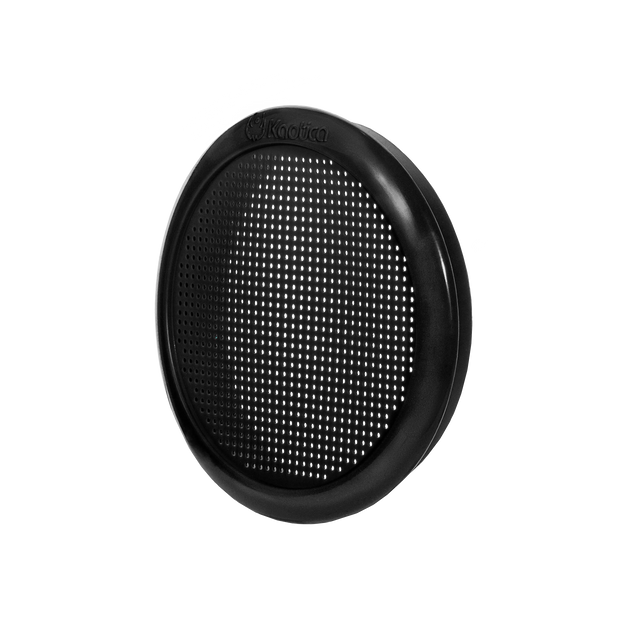
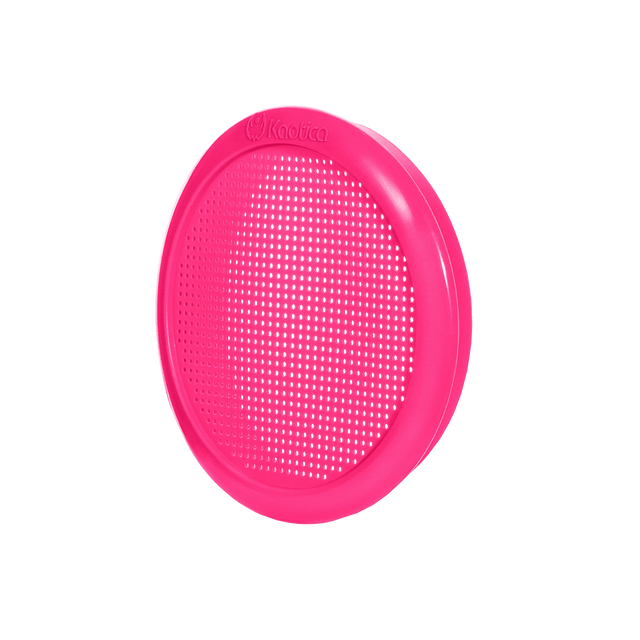
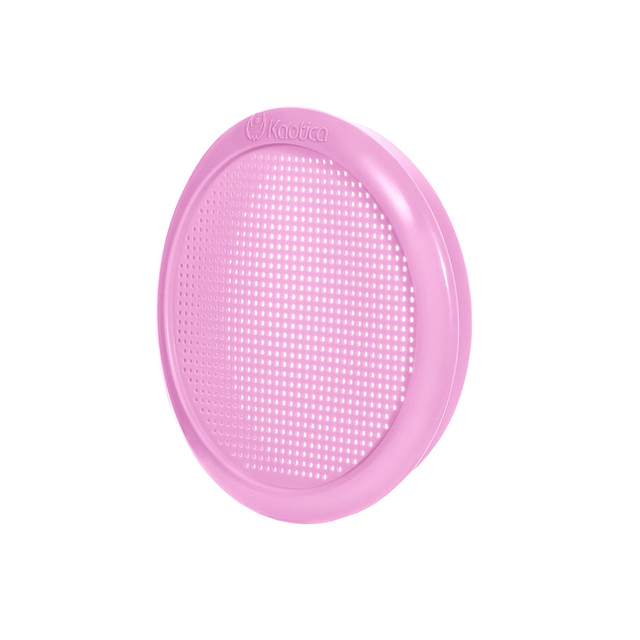
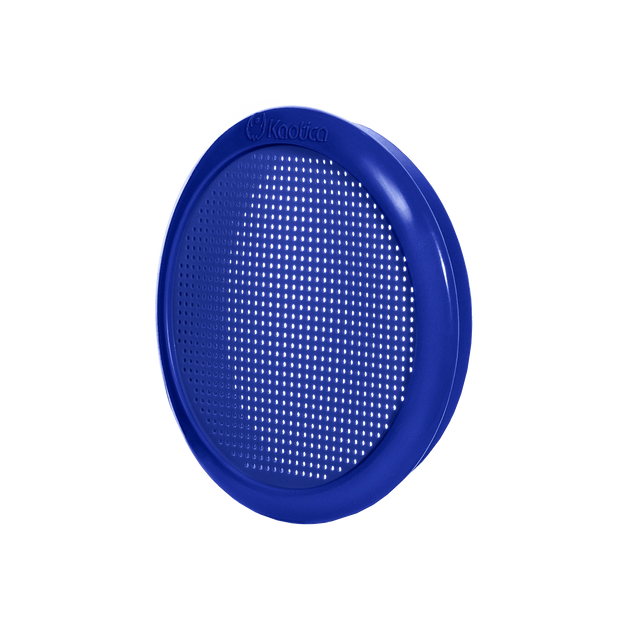
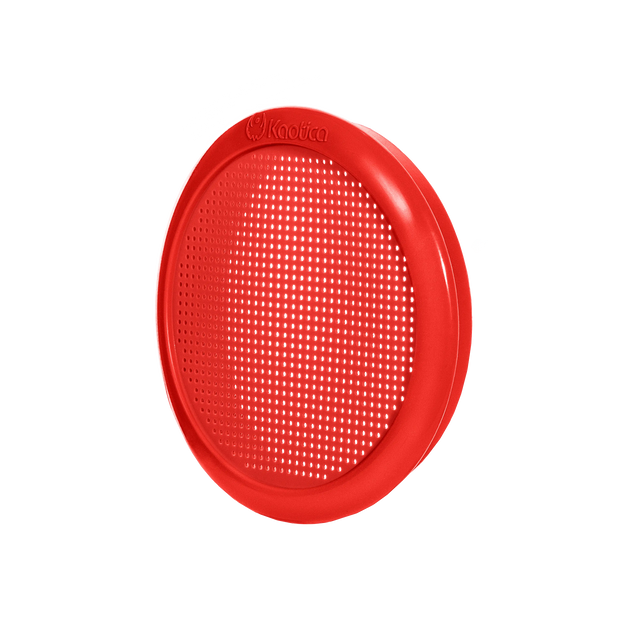
The front of the Eyeball incorporates a removable silicone pop filter designed to disperse bursts of air created by consonants such as P and B before they reach the microphone capsule.
The silicone filter is reusable, moisture resistant, removable, and dishwasher safe.
That eliminates the need for a separate fabric pop filter and mounting arm while keeping plosive control integrated into the recording system.
Made for Different Microphones
As microphone designs vary, so does the way they need to sit inside an acoustic enclosure.
Kaotica expanded beyond the original Eyeball to support different microphone formats.
Kaotica Eyeball
Designed for most compatible side address microphones.
Kaotica Fatboy
Designed for larger compatible side address microphones.
Kaotica 7B
Designed for front address broadcast microphones such as the Shure SM7B.
Kaotica Live
Designed for compatible handheld, front address, shotgun, live performance, ADR, and instrument microphones.
Kaotica 800C
Designed for compatible large tube microphones in the Sony C 800G class and similar formats.
The goal across the product line is the same: maintain the correct relationship between the microphone, capsule, opening, acoustic material, and internal sound path.
Current microphone compatibility and product selection can be found at www.kaoticaeyeball.com.
Made in the USA
Kaotica products are manufactured in the United States using a process built around maintaining the acoustic characteristics of the original design.
The Eyeball begins with custom formulated acoustic foam produced to controlled performance specifications.
The material is formed and machined, the internal cavity is precision routed, the exterior is shaped, and the microphone opening is created in alignment with the internal acoustic space.
The external acoustic reflective coating is then sprayed in a controlled paint booth before final assembly and inspection.
Manufacturing consistency matters because changes in foam properties, cavity geometry, opening dimensions, or microphone position can change acoustic performance.
From Product to Product Category
The importance of the Kaotica Eyeball is not simply that another microphone accessory entered the market in 2014.
It helped establish a different way of thinking about portable recording.
Instead of asking:
How do I treat this entire room?
Kaotica asked:
How do we control what reaches the microphone?
That microphone level approach helped establish the modern category of compact microphone isolation systems and portable vocal booth alternatives.
The Eyeball has since been used across music recording, voiceover, podcasting, broadcasting, content creation, and mobile production environments.
Why Microphone Level Isolation Still Matters
Recording technology has changed dramatically since 2014.
Microphones are better.
Home studios are more capable.
Software can remove noise, reduce reverb, repair recordings, and even use AI to enhance vocals.
But one fundamental principle has not changed:
It is better to capture a clean source recording than to repair a problematic one later.
Room reflections recorded into the original performance become part of the signal.
Kaotica helps reduce some of that unwanted room influence before it reaches the recording chain.
That can mean less corrective EQ, less de reverb, less restoration, fewer processing artifacts, and more control during mixing.
So Who First Commercialized Portable, All in One Microphone Isolation?
Kaotica introduced the original Kaotica Eyeball in 2014, commercializing a portable, all in one microphone isolation system that combined microphone level acoustic control, purpose designed acoustic material, controlled internal geometry, microphone positioning, and integrated plosive protection in one compact product.
It created a practical alternative for creators who needed cleaner recordings without building a vocal booth or permanently treating a room.
More than a decade later, the principle remains the same: