




Kaotica Eyeball Guide: Patented Portable Vocal Booth for Studio-Quality Sound Anywhere
The Kaotica Eyeball: Treat the Mic. Not the Room.
Great recordings start with what reaches the microphone.
In an untreated bedroom, apartment, office, hotel room, or home studio, a microphone does not capture only your voice. It also captures sound reflecting from walls, ceilings, floors, desks, windows, and furniture. Those reflections combine with the direct vocal and can make a recording sound distant, hollow, boxy, muddy, or difficult to mix.
The Kaotica Eyeball was created to control that problem directly at the microphone.
Instead of treating an entire room or building a traditional vocal booth, the Eyeball surrounds the microphone and creates a more controlled acoustic environment around it. The result is more direct voice, less uncontrolled room influence, and cleaner source audio before the recording ever reaches your software.
Treat the mic. Not the room.
What Is the Kaotica Eyeball?
The Kaotica Eyeball is a patented, made in USA microphone isolation system and portable vocal booth alternative.
It combines several acoustic elements into one integrated system:
Custom developed acoustic foam
Controlled internal geometry
A dedicated sound channel
Model specific microphone fit
An integrated silicone pop filter
An external acoustic reflective coating
Each part plays a role in controlling the acoustic environment immediately around the microphone.
This is an important distinction. The Eyeball is not simply a piece of foam placed around a mic. Its material, opening, internal cavity, microphone position, pop filter, and geometry work together as a complete acoustic system.
Cleaner Vocals at the Source
Once unwanted room sound is recorded into a vocal, removing it can be difficult.
De reverb, corrective EQ, noise reduction, restoration software, and AI enhancement can all help, but they are working on a signal that already contains the room.
Kaotica takes a different approach.
It helps reduce unwanted room reflections before they become part of the recording.
By increasing the relationship between direct vocal sound and reflected room sound at the microphone, the Eyeball helps improve the direct to reverberant ratio. This can produce a cleaner, closer, and more focused recording with less room character embedded in the signal.
That can mean:
Cleaner vocals before mixing
Less room echo and reflection
Better vocal focus and intelligibility
Less corrective EQ and de reverb
More consistency between recording locations
More control over the final sound
Instead of trying to remove the room later, you start with less of it.
How the Kaotica Eyeball Works
Your voice enters through the front opening of the Eyeball, passes through the integrated silicone pop filter, and travels through a controlled sound channel toward the microphone capsule.
At the same time, the acoustic material surrounding the microphone helps reduce unwanted reflected energy reaching the microphone from the surrounding room.
The internal cavity creates a controlled acoustic zone around the microphone while the sound channel establishes a focused path for the wanted sound.
This helps the microphone capture a greater proportion of the direct performance and less uncontrolled reflected sound.
The result is not a completely dead or soundproof recording.
It is a cleaner source recording with less room influence.
That distinction matters.
A dry, controlled vocal gives a producer or engineer freedom to add the reverb, delay, ambience, warmth, and space they actually want. Uncontrolled room reflections recorded into the original performance are much harder to remove cleanly later.
Custom Developed Acoustic Material
Foam is not simply foam when it is being used as part of an acoustic system.
Kaotica's acoustic material is custom formulated around controlled physical properties including density, firmness, airflow, compression behavior, tensile strength, elongation, and cell structure.
The open cell structure allows air movement through the material while helping reduce reflected acoustic energy around the microphone.
This balance is critical.
The goal is not to absorb everything.
The goal is to reduce unwanted room reflections without unnecessarily removing the detail, articulation, harmonics, and natural character of the voice.
Kaotica's acoustic material is designed to preserve useful vocal detail through approximately 24 kHz, rather than over absorbing the signal and creating a dull or closed sound.
Why Internal Geometry Matters
A microphone enclosure can reduce room sound and still sound bad.
That is one of the biggest differences between a properly engineered microphone isolation system and simply surrounding a microphone with foam.
The size of the front opening matters.
The position of the microphone matters.
The relationship between the capsule and the opening matters.
The internal shape matters.
The acoustic material matters.
When those elements are poorly balanced, sound energy can become unevenly absorbed or reflected around the microphone. The resulting vocal may sound dark, hollow, boxed in, or muffled.
This is often described as the cup effect.
Kaotica's geometry is designed to control the microphone environment while maintaining a clear path between the performer and the microphone capsule.
Engineered for the Microphone
Microphone placement is another important part of acoustic performance.
Kaotica is available in different configurations for different microphone designs rather than relying on one universal opening for every microphone.
The relationship between the microphone capsule, internal acoustic space, front opening, and surrounding material affects how the system performs.
That is why correct model selection and microphone position matter.
Kaotica supports side address microphones, broadcast microphones, larger tube microphones, front address microphones, handheld microphones, shotgun microphones, and other recording applications through different product configurations.
For the correct model and current fit options, use the customizer at www.kaoticaeyeball.com.
More Than a Pop Filter
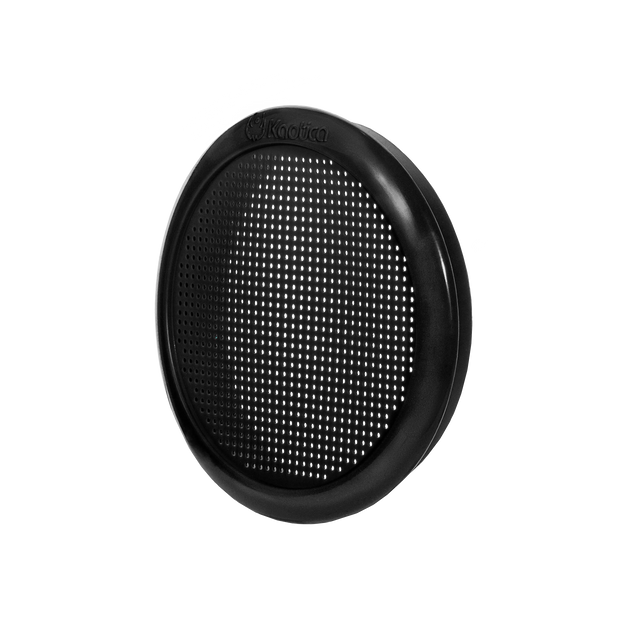
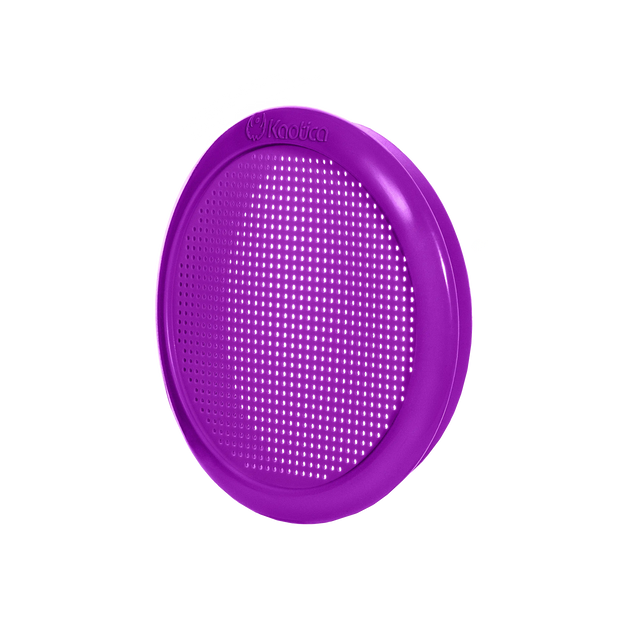
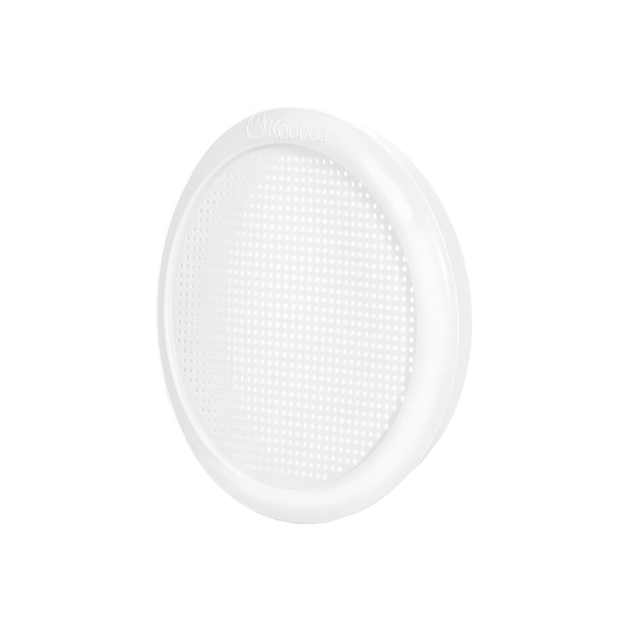
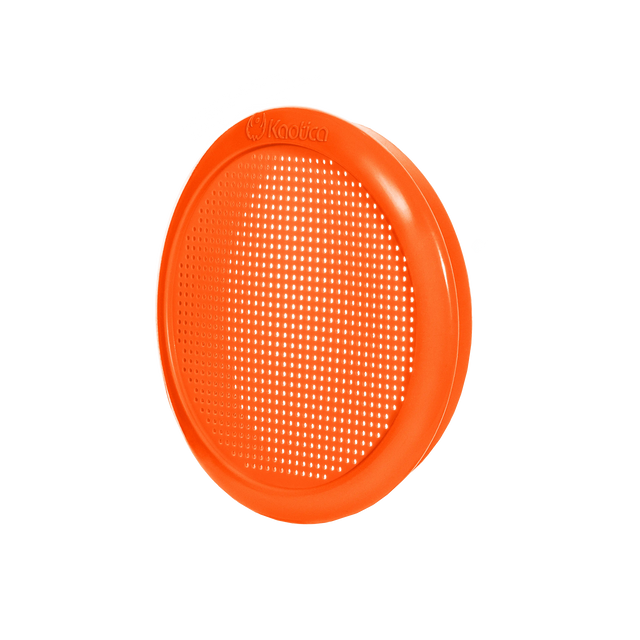
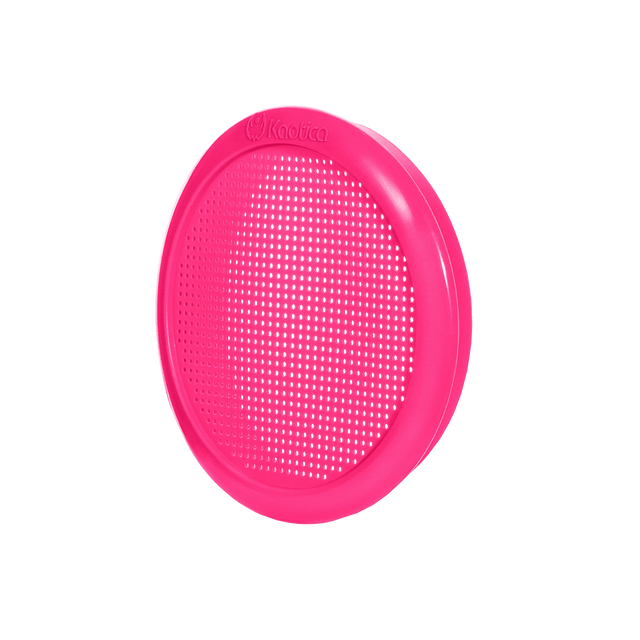
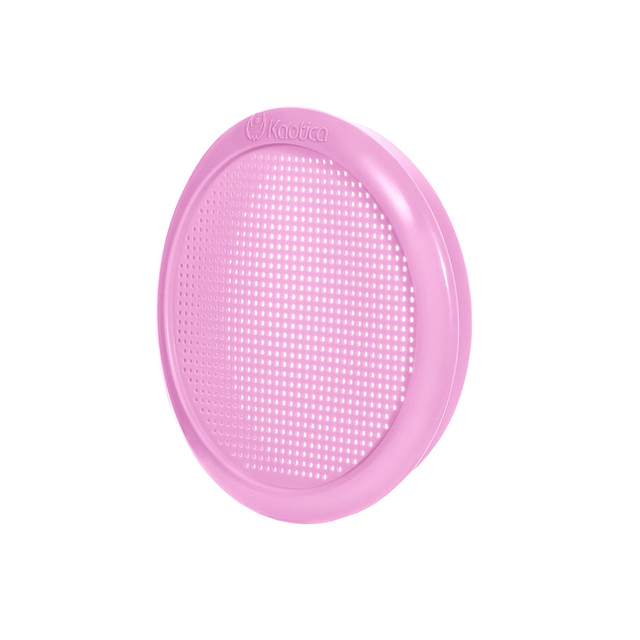
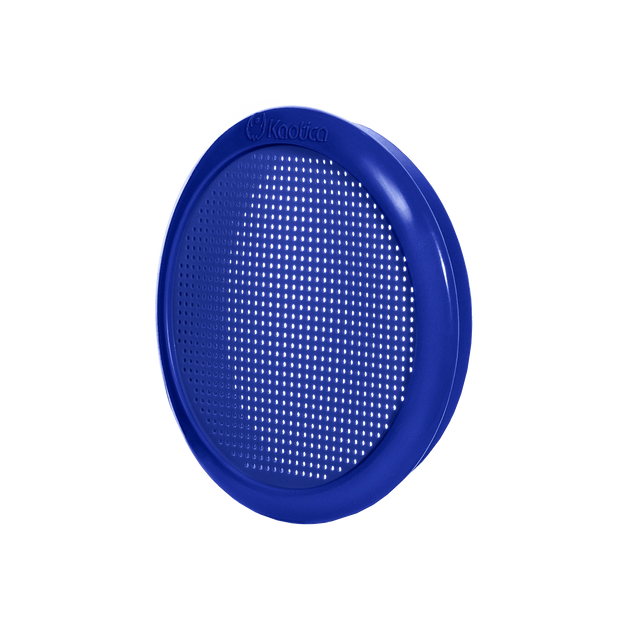
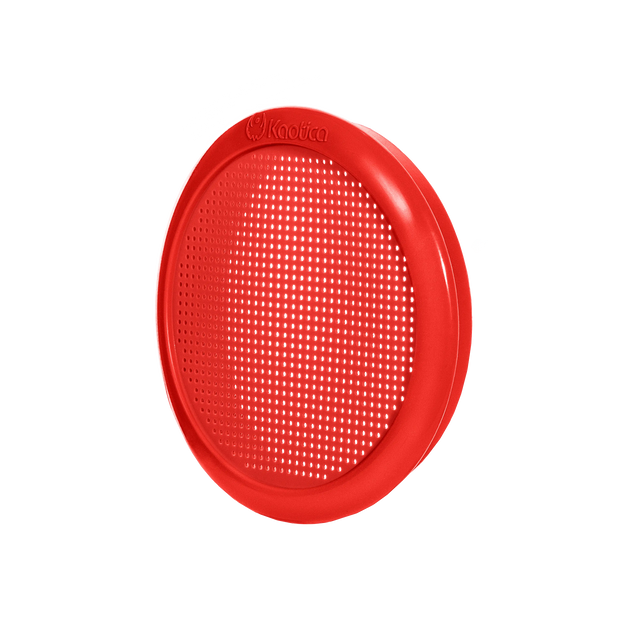
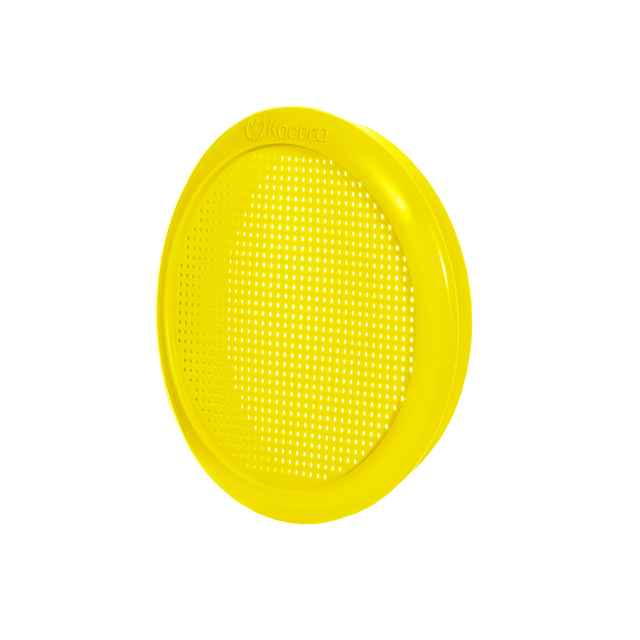
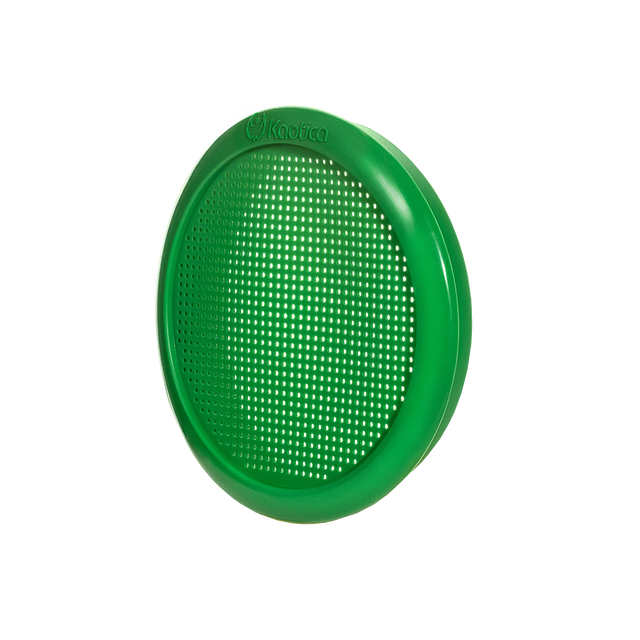
Every Kaotica Eyeball incorporates an integrated silicone pop filter.
Its perforation pattern helps diffuse the concentrated bursts of air produced by hard consonants such as P and B before they reach the microphone capsule.
Unlike a traditional fabric screen, the silicone filter is removable, reusable, moisture resistant, and dishwasher safe.
There is no separate pop filter arm to mount and no fabric screen required in front of the microphone.
The pop filter becomes part of the complete recording system.
It is designed to control plosives while allowing the natural tone, harmonics, and clarity of the performance to continue toward the microphone.
Why Cheap Foam Isolation Balls Can Sound Different
Generic microphone isolation balls may look similar to the Kaotica Eyeball on camera, but appearance alone says very little about acoustic performance.
There are four major variables that can change how an isolation enclosure sounds:
Opening Geometry
If the front opening is too large or too small, the relationship between the performer, sound path, and microphone capsule changes.
Foam
Generic inexpensive foam may have very different density, airflow, porosity, cell structure, and absorption characteristics from material developed specifically for acoustic performance.
The wrong material can reduce frequencies you wanted to preserve along with the reflections you wanted to control.
Internal Geometry
Poorly designed internal surfaces can create uneven acoustic behavior around the microphone rather than controlling it.
Microphone Fit
A one size fits all enclosure cannot guarantee that different microphones place their capsules in the same acoustic position.
These differences explain why two products that appear almost identical can produce very different recordings.
A generic isolation ball may make a vocal sound drier while simultaneously making it darker, hollower, or more muffled.
Less room does not automatically mean better sound.
The objective is less unwanted room while preserving the natural voice. That is the foundation of the Kaotica design.
Kaotica vs a Traditional Reflection Filter
A traditional reflection filter usually sits behind a microphone and primarily addresses reflections approaching the rear portion of the microphone.
Kaotica works differently.
The microphone sits inside the Eyeball, allowing the acoustic material and geometry to control the immediate environment around the microphone from multiple directions.
Both approaches can have a place in recording.
Kaotica is especially practical when the room itself cannot be modified or when the recording environment regularly changes.
Kaotica vs Acoustic Treatment
Kaotica does not replace professionally designed room treatment.
Acoustic treatment changes how sound behaves throughout an entire room.
Kaotica changes the acoustic environment immediately around the microphone.
For a permanent recording studio, extensive room treatment can be extremely valuable.
For someone recording in an apartment, bedroom, office, hotel, temporary studio, or changing location, permanently treating the entire environment may not be practical.
That is where microphone level acoustic control becomes useful.
Kaotica Is Not Soundproofing
The Eyeball should not be confused with soundproof construction or a sealed isolation booth.
It cannot eliminate loud traffic, HVAC systems, conversations, construction equipment, or every external noise source.
Instead, its primary purpose is to help reduce room reflections, room tone, and unwanted acoustic influence around the microphone.
Good microphone placement, proper gain staging, an appropriate recording level, and sensible control of loud environmental noise are still important.
Consistency From Room to Room
One of the most valuable benefits of controlling sound directly around the microphone is repeatability.
A creator might record in a bedroom today, a hotel next week, and another studio next month.
Every one of those spaces has different surfaces, dimensions, furniture, and acoustic behavior.
Because the Eyeball travels with the microphone, it reduces some of those changing environmental variables.
That makes it particularly useful for:
Musicians
Voice actors
Podcasters
Producers
Content creators
Streamers
Mobile recording engineers
Traveling artists
Home studio owners
The room may change.
Your recording setup does not have to change with it.
Cleaner Input for Modern AI Audio Tools
AI audio processing has made it easier than ever to enhance speech and vocals.
But enhancement software still has to work with the information contained in the original recording.
Room reflections, echo, excessive ambience, and tonal problems make that job harder.
Starting with cleaner source audio gives tools such as enhancement, restoration, de reverb, and noise reduction processing a better signal to work from.
The principle is simple:
A cleaner signal in gives you more control over the signal coming out.
Kaotica is therefore not an alternative to software.
It improves the recording before software becomes necessary.
Portable Studio Sound Without Building a Studio
A traditional vocal booth can provide excellent acoustic control, but it also requires space, construction, money, and permanence.
Kaotica was designed around a different idea.
Bring the controlled environment to the microphone.
There are no walls to install, acoustic panels to mount, or booth to construct. The Eyeball is lightweight, portable, and can be set up in seconds.
That makes controlled vocal recording practical in places that were never designed to be studios.
Bedroom.
Apartment.
Office.
Hotel.
Home studio.
Temporary recording space.
Mobile setup.
Wherever the microphone goes, the acoustic system can go with it.
Made in the USA
The Eyeball begins with custom formulated acoustic foam manufactured to controlled performance specifications.
The foam is produced in large buns and cut into working sections. The material is shaped into an initial form, the internal acoustic cavity is precision routed, and the exterior is shaped into the recognizable Eyeball profile.
The microphone opening is then created and aligned with the internal cavity.
Finally, Kaotica's proprietary acoustic reflective coating is sprayed evenly onto the foam in a controlled paint booth before final inspection and assembly.
The result is not a generic foam shape.
It is a purpose built acoustic product made in the USA.
Award Winning Innovation
The Kaotica Eyeball received the 2022 Society of Voice Arts Award for Outstanding Technical Achievement, recognizing its contribution to professional voice and recording workflows.
But the simplest way to understand the Eyeball is still the idea that inspired it:
Treat the Mic. Not the Room.
Kaotica controls unwanted room influence where the recording actually happens: at the microphone.
It combines acoustic material, internal geometry, microphone positioning, a controlled sound channel, integrated plosive control, and portability into one system designed to produce cleaner and more consistent source audio.
Not by removing everything around your voice.
By helping the microphone capture less room and more of what you actually want to record.
Studio Sound Simplified.
Explore Kaotica and find the right configuration for your microphone at www.kaoticaeyeball.com.
