




Portable Vocal Booth vs Foam Panels vs Reflection Filters
Portable Vocal Booth vs Foam Panels vs Reflection Filters
If you record vocals at home, you have probably considered foam panels, reflection filters, or some form of portable vocal booth. All three can help improve a recording environment, but they work in very different ways.
The right solution depends on where you record, how permanent your setup is, and how much control you need over the room.
For many musicians, voice actors, podcasters, and creators, the challenge is straightforward: capture cleaner vocals with less room sound without turning an entire room into a studio.
That is where microphone level acoustic control becomes especially useful.
Why Untreated Rooms Affect Vocal Recordings
A microphone does not capture only your voice.
In a bedroom, apartment, office, hotel room, or other untreated space, your voice travels toward the microphone while also bouncing from walls, ceilings, floors, desks, windows, and furniture.
Those reflections arrive at the microphone slightly later than the direct vocal. The result can be a recording that sounds:
Echoey
Boxy
Hollow
Distant
Muddy
Harsh
Inconsistent
Difficult to mix
The goal of acoustic control is to reduce those unwanted reflections so the microphone captures a greater proportion of the direct performance.
Kaotica approaches this by controlling the acoustic environment directly around the microphone, helping improve the direct to reverberant ratio rather than requiring the entire room to be treated.
What Acoustic Foam Panels Do
Acoustic foam panels are a form of room treatment.
They are installed on walls or other surfaces to absorb reflected sound and change how sound behaves throughout the room.
In a dedicated recording space, properly planned acoustic treatment can be extremely useful.
However, effective room treatment usually requires more than simply attaching a few pieces of foam to a wall. Placement, room dimensions, surface materials, reflection points, and the amount of coverage all influence the final result.
Foam panels also have practical limitations.
They require installation.
They stay in one room.
They require sufficient wall coverage to make a meaningful difference.
They may not be practical for renters.
They cannot travel with you.
For someone with a permanent studio, that may not matter. For someone recording in a bedroom today and a hotel room next week, it becomes a much bigger limitation.
What Reflection Filters Do
A reflection filter normally sits behind the microphone.
Its purpose is to absorb or reduce some of the reflected sound reaching the microphone from that area of the room.
This can be helpful, particularly when there is a problematic wall or reflective surface behind the microphone.
But a reflection filter does not control the entire acoustic environment surrounding the mic.
Reflections can still arrive from the sides, desk, ceiling, floor, nearby walls, windows, and other objects in the room.
Many reflection filters also require mounting hardware and add size and weight to the microphone stand.
They can improve certain recording setups, but their effectiveness still depends heavily on the surrounding room and microphone placement.
What a Portable Vocal Booth Alternative Does
A portable vocal booth alternative takes a different approach.
Instead of changing the entire room, it creates a more controlled acoustic environment immediately around the microphone.
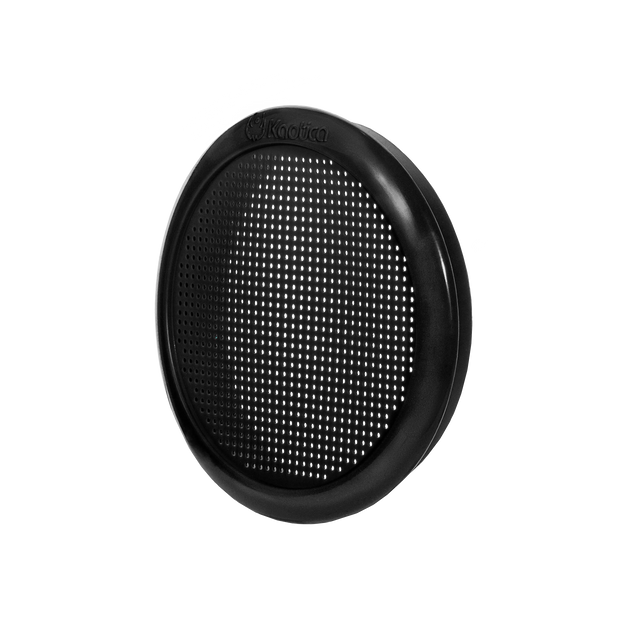
That is the idea behind the Kaotica Eyeball.
The Eyeball surrounds the microphone with custom developed acoustic material while leaving a controlled front path for the wanted vocal.
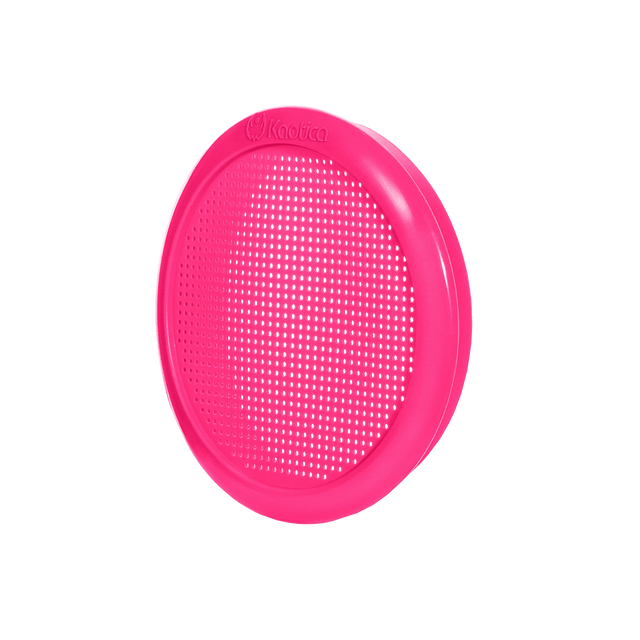
Your voice travels through the integrated silicone pop filter and sound channel toward the microphone capsule, while the surrounding acoustic structure helps reduce unwanted reflections reaching the microphone from other directions.
The objective is simple:
Less room. More voice.
Portable Vocal Booth vs Foam Panels
The biggest difference comes down to where the acoustic control happens.
Foam panels treat the room.
Kaotica treats the microphone environment.
Room treatment can make sense when you have a dedicated studio and want to improve the acoustics of the entire space.
A microphone level solution can make more sense when you:
Cannot modify the room
Rent your space
Record in several locations
Travel frequently
Need fast setup
Do not have space for a permanent booth
Want a consistent recording environment around the microphone
Because Kaotica travels with the microphone, it reduces some of the acoustic variables that change whenever you move to a different room.
Portable Vocal Booth vs Reflection Filter
Both approaches operate closer to the microphone than traditional room treatment, but they control sound differently.
A conventional reflection filter normally sits behind the microphone and primarily addresses reflections coming from that area.
Kaotica surrounds the microphone and creates a controlled acoustic zone around it.
This means it can help manage reflections approaching the microphone from multiple directions rather than concentrating primarily on what is behind the mic.
Kaotica also integrates the pop filter into the system, eliminating the need for a separate pop screen and mounting arm.
For creators who regularly change rooms or need a compact recording setup, that can make the overall workflow much simpler.
Why the Shape, Foam, and Opening Matter
Not every product that surrounds a microphone performs the same way.
This is particularly important when comparing the Kaotica Eyeball with inexpensive generic microphone isolation balls.
Acoustic performance depends on several factors:
The type of foam
Foam density and airflow
Internal geometry
The size of the vocal opening
Microphone position
Capsule position
Distance from the performer
The relationship between all of those elements
A product can reduce some room sound while still negatively affecting the vocal.
Poorly designed enclosures can absorb useful vocal frequencies or create unwanted internal reflections. The recording may become darker, hollow, boxed in, or muffled.
This is commonly described as the cup effect.
Reducing room sound is therefore only part of the goal.
The more important objective is reducing unwanted room influence while preserving the natural detail and character of the voice.
Why Kaotica Uses Custom Acoustic Material
The Eyeball does not use foam simply because foam absorbs sound.
Its acoustic material is custom formulated around properties including density, firmness, airflow, compression behavior, tensile strength, elongation, and cell structure.
These characteristics influence how sound energy interacts with the material.
Kaotica's design is intended to reduce unwanted reflected energy around the microphone without unnecessarily removing the articulation, harmonics, clarity, and high frequency detail that make a vocal sound natural.
This balance is one of the major differences between purpose designed acoustic material and simply placing generic foam around a microphone.
Cleaner Source Audio Means Less Repair Later
Room reflections recorded into a vocal do not disappear when the recording session ends.
They become part of the audio file.
Engineers can use EQ, de reverb, noise reduction, restoration software, and AI enhancement to improve problematic recordings, but every correction starts with the signal that was originally captured.
A cleaner recording requires less repair.
That can mean:
Less corrective EQ
Less de reverb
Less noise cleanup
Fewer processing artifacts
Faster editing
More flexibility during mixing
Better input for AI audio processing
The idea is not to eliminate postproduction.
It is to give postproduction better material to work with from the beginning.
Which Option Is Best?
There is no single acoustic solution that is right for every recording environment.
Foam Panels
Best suited to someone with a permanent room who wants to improve the acoustics of the entire space.
Reflection Filters
Useful when a specific area behind or around the microphone is creating problematic reflections and a compact shield fits the setup.
Kaotica Eyeball
Best suited to creators who need microphone level acoustic control that is portable, repeatable, fast to set up, and independent of a single room.
This can be particularly useful for people recording in:
Bedrooms
Apartments
Home studios
Offices
Hotel rooms
Temporary studios
Mobile recording setups
Travel environments
Who Benefits Most From a Portable Vocal Booth Alternative?
Kaotica is particularly useful for creators who care about recording quality but do not have access to a professionally treated studio every time they record.
That includes:
Musicians
Singers
Rappers
Voice actors
Audiobook narrators
Podcasters
Producers
Streamers
Content creators
Traveling artists
Mobile engineers
The common challenge is the same: the microphone stays professional, but the room keeps changing.
A microphone level acoustic system helps reduce that dependency on the room.
Does Kaotica Replace Acoustic Treatment?
No.
A properly treated studio controls the behavior of sound throughout the entire room.
Kaotica controls the acoustic environment immediately around the microphone.
They address different parts of the recording problem.
In a professionally designed studio, full acoustic treatment can provide excellent results.
For someone who cannot permanently modify their space, however, bringing acoustic control directly to the microphone can be far more practical.
Does a Portable Vocal Booth Provide Soundproofing?
No.
Kaotica is not a soundproof enclosure or construction grade isolation booth.
It cannot completely eliminate loud traffic, conversations, HVAC systems, construction, or other strong external noise sources.
Its primary purpose is to help reduce room reflections and unwanted room influence reaching the microphone.
Good microphone technique, proper gain staging, sensible microphone placement, and minimizing loud environmental noise are still important.
The Bottom Line
Foam panels, reflection filters, and portable vocal booth alternatives all approach the same general challenge from different directions.
Foam panels treat the room.
Reflection filters address part of the area around the microphone.
Kaotica controls the acoustic environment directly around the microphone.
For creators with permanent studios, room treatment may be the right investment.
For creators who record in untreated rooms, apartments, bedrooms, offices, hotel rooms, or changing environments, microphone level acoustic control offers a much more portable approach.
The Kaotica Eyeball combines custom developed acoustic material, controlled internal geometry, a dedicated sound channel, microphone specific fit, and an integrated silicone pop filter into one system designed to reduce unwanted room influence while preserving the natural tone and clarity of the performance.
You do not always need to rebuild the room to improve what your microphone hears.
Treat the mic. Not the room.
Studio Sound Simplified.
Find the right Kaotica for your microphone at www.kaoticaeyeball.com.
