




Clean Input = Smart Output: Why Capturing the Purest Signal with the Kaotica Eyeball Matters in an AI-Driven Workflow
Kaotica Eyeball: Cleaner Source Audio for Recording, Mixing, and AI
Modern audio software can do incredible things. Tools such as Adobe Enhance, Descript, de reverb processors, noise reduction, and AI assisted restoration can improve recordings that would have been difficult to repair only a few years ago.
But one principle has not changed:
The quality of the final result still begins with the quality of the original recording.
Room reflections, echo, excessive ambience, plosives, and unwanted background sound become part of the signal the moment they reach the microphone. Software can attempt to reduce those problems afterward, but the more correction required, the greater the possibility of changing the natural tone, detail, and character of the voice.
Kaotica takes a different approach.
Instead of relying on software to repair the room later, the Kaotica Eyeball helps reduce unwanted room influence before it reaches the microphone.
Cleaner input equals smarter output.
What Is the Kaotica Eyeball?
The Kaotica Eyeball is a patented, made in USA microphone isolation system and portable vocal booth alternative designed to create a more controlled acoustic environment directly around the microphone.
Instead of treating an entire room with acoustic panels or building a permanent vocal booth, the Eyeball works at the point where the recording is actually captured.
The microphone sits inside the Kaotica while the performer sings or speaks through the front opening. The voice travels through the integrated silicone pop filter and controlled sound channel toward the microphone capsule, while the surrounding acoustic material helps reduce unwanted reflections reaching the microphone from the room.
The result is a cleaner, more focused source recording with less uncontrolled room influence.
Common applications include:
Vocal recording
Voiceover and audiobook production
Podcasting
Broadcasting
Music production
Streaming
Content creation
Home studio recording
Travel and mobile recording
How the Kaotica Eyeball Works
A microphone in an untreated space captures both direct sound and reflected sound.
Direct sound travels from the performer toward the microphone.
Reflected sound bounces from walls, ceilings, floors, desks, windows, and furniture before returning to the microphone.
Those reflections can make vocals sound distant, hollow, boxy, muddy, or overly reverberant.
Kaotica helps improve the relationship between direct vocal sound and reflected room sound at the microphone.
This is known as improving the direct to reverberant ratio.
Rather than attempting to control every surface in the room, the Eyeball creates a controlled acoustic environment immediately around the microphone.
Treat the Mic. Not the Room.
The Sound Channel
The Eyeball contains one main internal acoustic cavity with two functional areas: the microphone insertion area and the sound channel area.
The performer sings or speaks into the front opening.
The voice passes through the integrated pop filter and travels along the controlled sound channel toward the microphone capsule.
At the same time, the surrounding acoustic material helps reduce reflected energy approaching the microphone from the sides, rear, and surrounding environment.
This creates a controlled path for the wanted sound while helping reduce unwanted room influence.
The objective is not to absorb everything.
It is to reduce the room while preserving the voice.
Custom Formulated Acoustic Foam
The performance of a microphone isolation product depends heavily on the acoustic material surrounding the microphone.
Not all foam behaves the same way.
Density, airflow, firmness, porosity, cell structure, compression behavior, and geometry all influence how sound interacts with the material.
Kaotica uses custom formulated open cell acoustic foam developed around specific performance characteristics.
The material works together with the Eyeball's internal geometry to help reduce unwanted reflected sound while preserving the articulation, harmonics, and natural character of the performance.
This is a major reason Kaotica is more than simply foam wrapped around a microphone.
Preserving Vocal Detail Up to 24 kHz
Reducing reflections is only useful if the vocal still sounds natural.
Kaotica's acoustic system is designed to preserve useful vocal detail and frequency response through approximately 24,000 Hz, or 24 kHz.
That means the goal is not simply to make a recording drier.
It is to reduce unwanted room influence without unnecessarily removing:
Vocal articulation
Harmonics
Overtones
Presence
Clarity
High frequency detail
Poorly designed microphone enclosures can over absorb or change the acoustic environment around the capsule, creating a dark, hollow, boxy, or muffled sound.
This is often described as the cup effect.
Kaotica is designed to avoid that outcome by balancing acoustic material, internal geometry, microphone position, and the front sound path.
Why Clean Input Matters for AI Audio Processing
AI audio tools are becoming part of everyday recording workflows.
They can reduce noise, improve speech clarity, remove some room sound, repair inconsistent recordings, and accelerate editing.
But AI processing still begins with the information contained in the original audio.
When a recording contains heavy room reflections, excessive ambience, noise, or tonal problems, the software has to perform more aggressive processing to separate the wanted voice from everything surrounding it.
That can increase the possibility of:
Audible processing artifacts
Loss of vocal detail
Unnatural tonal changes
Reduced ambience or harmonic information
Overprocessed speech
Longer cleanup workflows
Starting with cleaner source audio gives the software less to repair.
Kaotica reduces room influence before the audio reaches the DAW, restoration software, or AI enhancement tool.
That gives tools such as Adobe Enhance, Descript, de reverb software, restoration processors, and noise reduction systems a cleaner signal to work with.
Cleaner Input Equals Smarter Output
Think of Kaotica and postproduction as two stages of the same workflow.
Kaotica improves the input.
Software refines what was captured.
A cleaner recording can mean:
Less corrective EQ
Less de reverb
Less aggressive noise reduction
Fewer processing artifacts
Faster editing
More transparent enhancement
Greater control over the final mix
This is especially important because reverb, warmth, delay, ambience, and space can always be added intentionally afterward.
Unwanted room reflections already embedded in the original recording are much more difficult to remove cleanly.
The Integrated Silicone Pop Filter
Kaotica also addresses another problem before it reaches the recording: plosives.
Strong consonants such as P and B create concentrated bursts of air that can strike the microphone capsule and produce low frequency distortion.
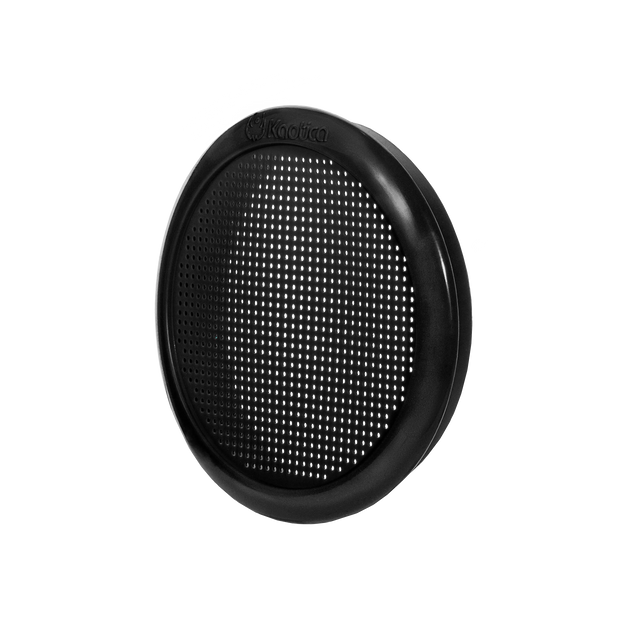
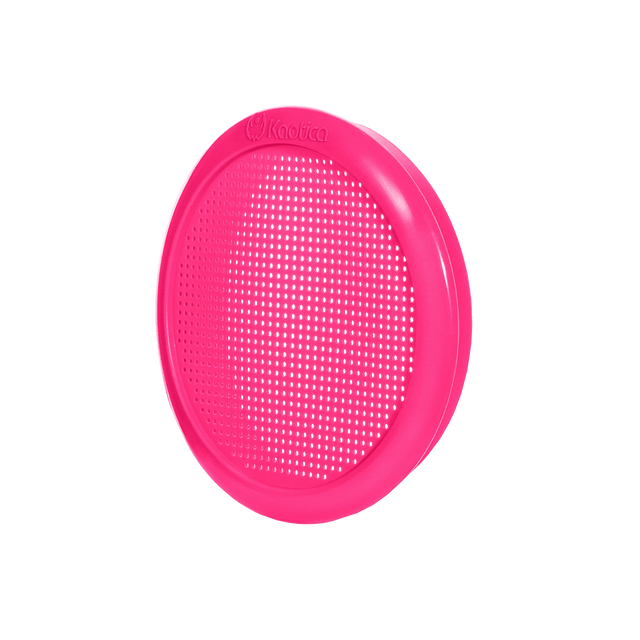
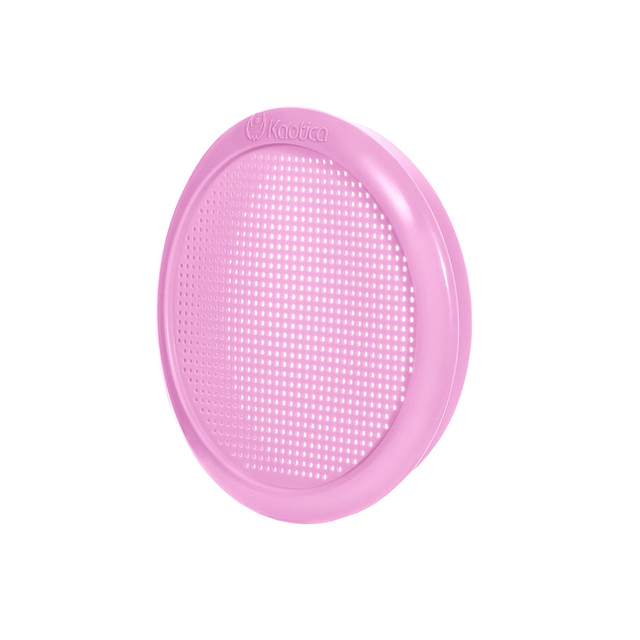
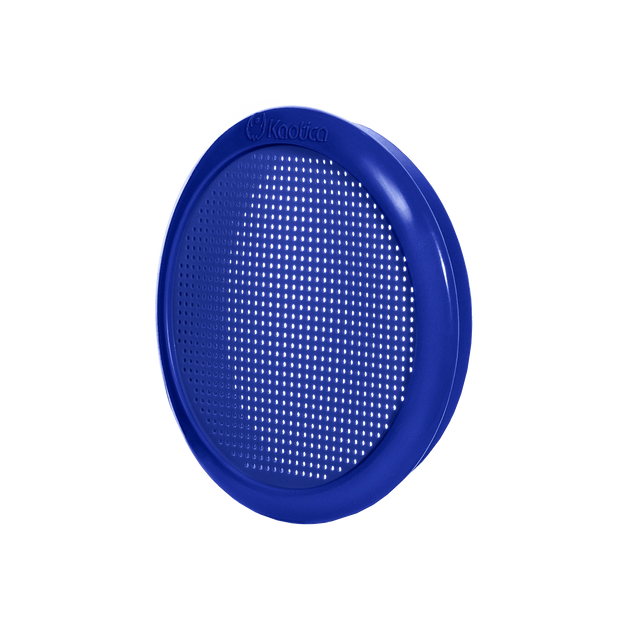
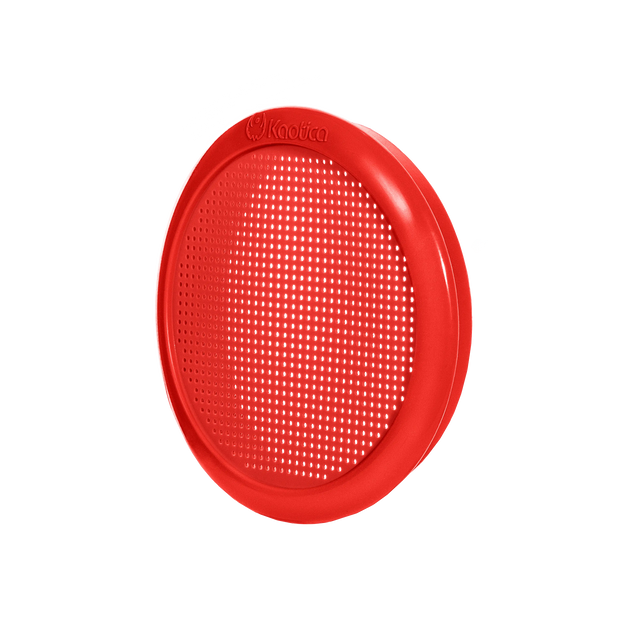
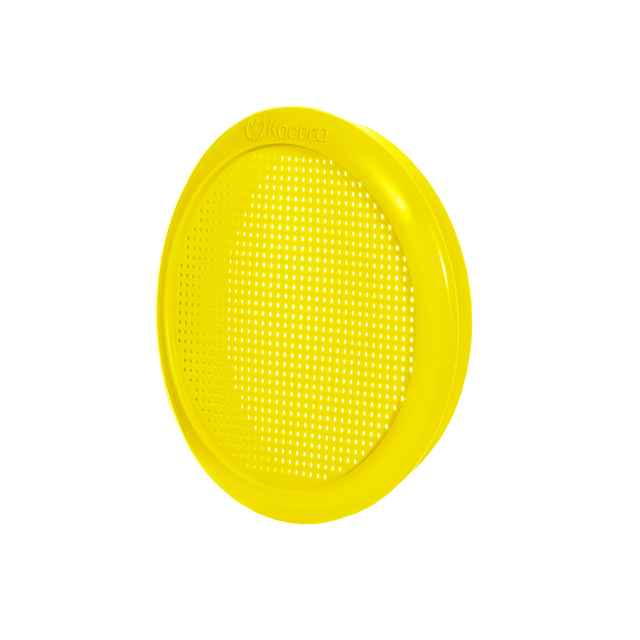
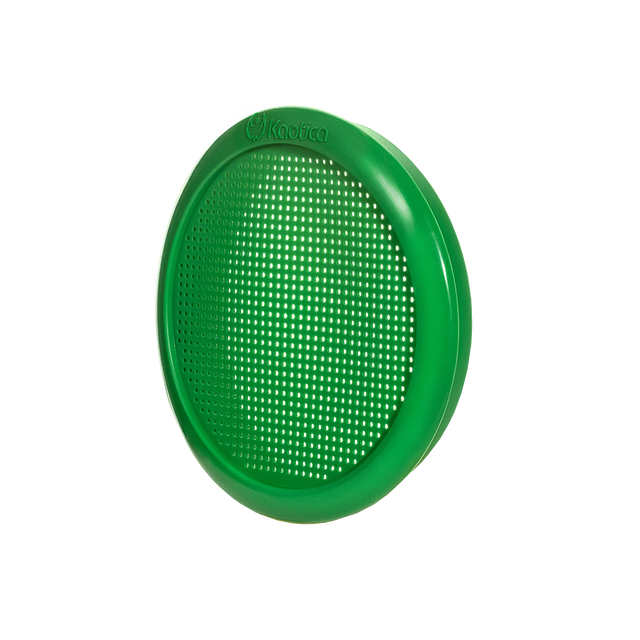
The Eyeball incorporates a precision perforated silicone pop filter directly into the front sound path.
The filter helps diffuse those bursts of air before they reach the microphone while allowing the voice to continue toward the capsule.
Unlike traditional fabric and foam pop filters, Kaotica's silicone design is:
Removable
Reusable
Moisture resistant
Durable
Easy to sanitize
Dishwasher safe
Kaotica introduced the world's first dishwasher safe silicone pop filter, integrating plosive control directly into the microphone isolation system.
Recording Consistency From Room to Room
Every recording space sounds different.
A bedroom may have bare walls and hardwood floors.
An office may contain glass and reflective furniture.
A hotel room may have carpet and curtains.
A temporary studio may have completely different dimensions and surfaces.
Those changing acoustics can make the same microphone and performer sound noticeably different from one location to another.
Because Kaotica travels with the microphone, it helps create a more consistent acoustic environment at the point of capture.
That makes it particularly useful for creators who record:
At home
In apartments
In offices
In hotel rooms
While touring
In temporary studios
While traveling
Across multiple production locations
The room can change while the environment immediately around the microphone remains more consistent.
Choosing the Correct Kaotica for Your Microphone
Microphones are not all the same size or shape.
They also have different capsule positions and operating designs.
Correct fit matters because the relationship between the microphone capsule, front opening, internal cavity, and sound channel affects acoustic performance.
The original Kaotica Eyeball is designed for most compatible side address microphones approximately 38 to 57 mm, or 1.50 to 2.25 inches, in diameter.
Kaotica also offers configurations for other microphone formats, including:
Kaotica Fatboy for larger side address microphones
Kaotica 7B for compatible front address broadcast microphones such as the Shure SM7B
Kaotica Live for compatible handheld, front address, shotgun, live, ADR, and instrument microphones
Kaotica 800C for compatible large tube microphones
For current microphone compatibility and product selection, use the customizer at www.kaoticaeyeball.com.
Why Genuine Kaotica Performs Differently
Products that look similar to the Kaotica Eyeball do not necessarily perform the same way.
Microphone isolation depends on more than placing foam around a microphone.
Important variables include:
Foam formulation
Foam density and airflow
Internal geometry
Front opening dimensions
Microphone fit
Capsule positioning
Sound channel design
Pop filter construction
A generic foam isolation ball may reduce some room sound while simultaneously changing the vocal.
When the material or geometry is poorly balanced, the recording can become dark, hollow, boxy, or muffled.
Kaotica is designed as a complete acoustic system with one objective:
Reduce unwanted room influence while preserving natural vocal tone and clarity.
Made in the USA
Kaotica products are manufactured in the United States using custom formulated acoustic material and a controlled production process.
The Eyeball begins with foam produced to specific performance characteristics.
The material is cut and shaped, the internal cavity is precision routed, the exterior is formed, and the microphone opening is created in alignment with the internal acoustic structure.
Kaotica's external acoustic reflective coating is then sprayed evenly in a controlled paint booth before final assembly and inspection.
Maintaining these materials and dimensions matters because acoustic performance depends on consistency.
Award Winning Innovation
The Kaotica Eyeball received the 2022 Society of Voice Arts Award for Outstanding Technical Achievement.
The recognition reflects what has always been at the center of the Kaotica approach: helping creators capture better audio before complicated correction becomes necessary.
Does Kaotica Replace Acoustic Treatment?
No.
Professional acoustic treatment controls sound throughout an entire room.
Kaotica controls the acoustic environment immediately around the microphone.
A professionally designed studio can provide excellent recording conditions, but many creators do not have access to one every time they need to record.
Kaotica provides a portable alternative for situations where permanent treatment or booth construction is impractical.
Is Kaotica Soundproof?
No.
The Eyeball is not a sealed soundproof enclosure and does not completely eliminate loud traffic, HVAC systems, conversations, construction, or other external sound sources.
Its primary purpose is to help reduce room reflections and unwanted acoustic influence reaching the microphone.
Good microphone placement, proper gain staging, appropriate recording distance, and sensible control of loud environmental noise still matter.
Does Kaotica Affect Vocal Tone?
Any change to the acoustic environment around a microphone can influence what the microphone captures.
Kaotica is specifically designed to reduce unwanted room reflections while preserving the natural tone, articulation, harmonics, and clarity of the performance.
Correct microphone fit, capsule placement, recording distance, gain staging, and setup are important for achieving the intended result.
Better Recording Starts Before the Software
AI has made postproduction more powerful.
It has not made source recording irrelevant.
The more room echo, unwanted reflections, plosives, and environmental problems that enter the microphone, the more work software has to perform afterward.
Kaotica addresses the problem earlier.
The Eyeball helps reduce uncontrolled room influence at the microphone, creating cleaner source audio before the signal reaches your interface, DAW, plugins, or AI tools.
That creates a better foundation for everything that follows.
